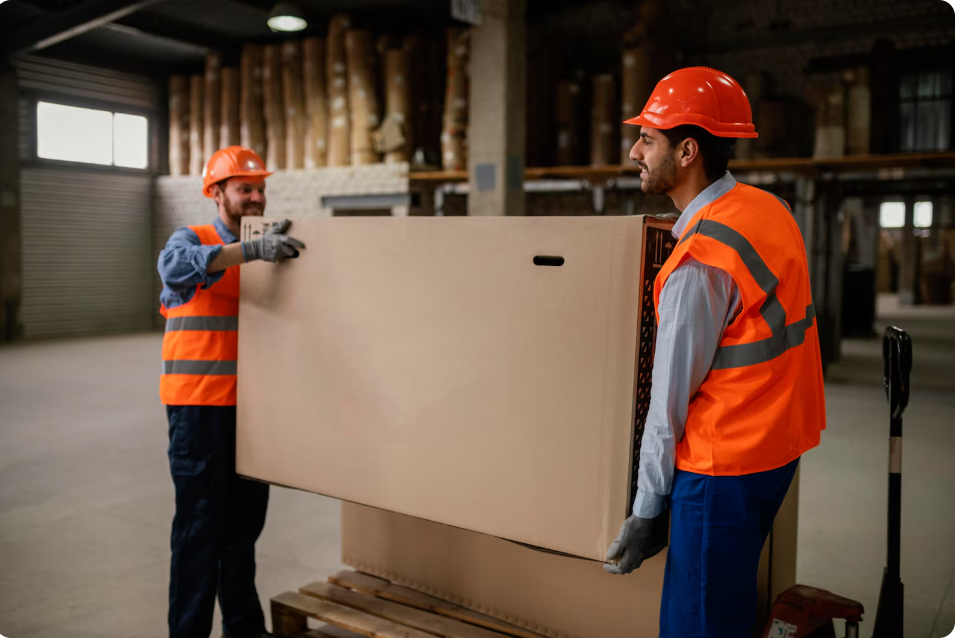
Compression damage is one of the most common—and most expensive—failures in industrial shipping. It rarely happens from a dramatic event like a drop. Instead, it happens slowly. Cartons get stacked. Loads sit in terminals. Pallets remain staged in warehouses. Over time, corrugated loses strength, cartons crush, and the entire unit load begins to fail.
When compression damage happens, it creates more than product loss. It creates shipping delays, receiving issues, freight claims, and customer frustration. In regulated environments, it can trigger quarantine or rejection even if the product inside is not visibly damaged.
Compression damage affects nearly every industrial market. It shows up in aerospace packaging shipments when cartons collapse and parts shift. It shows up in pharmaceutical packaging programs when label integrity fails. It shows up in food packaging environments when cartons arrive soft and dirty. It shows up in electronics packaging programs when internal protection is compromised.
The good news is that most compression damage is preventable with standardized packaging systems.
In this article, we’ll explain why compression damage happens, how to reduce it, and how industrial packaging solutions help companies ship stronger loads without overpacking.
Why Corrugated Boxes Crush in Industrial Freight
Corrugated boxes fail under compression for a few predictable reasons.
First, the carton may not be strong enough for the load weight. Many operations select cartons based on size, not compression rating.
Second, cartons may be oversized. When a carton has too much empty space, it flexes more easily. It also requires more void fill, which often settles over time.
Third, cartons may be exposed to humidity. Corrugated absorbs moisture and loses compression strength. This is especially common in long transit cycles and export shipping.
Fourth, pallet stacking patterns may be uneven. If cartons do not stack evenly, compression forces concentrate on weak points.
Finally, pallet loads may be wrapped incorrectly. If stretch film is loose, cartons shift and settle, increasing pressure on the bottom layers.
This is why compression damage is not just a carton problem. It is a packaging system problem.
How Compression Damage Creates Hidden Failures
Compression damage often causes cascading issues.
When cartons crush, internal organization collapses. Cushioning materials shift. Foam packaging inserts compress. Parts move and collide. Labels tear or peel. The shipment becomes disorganized.
Even if the product survives, receiving slows down. Customers may reject the shipment because it looks compromised.
In aerospace packaging and military packaging environments, crushed cartons create traceability concerns. In pharmaceutical packaging programs, crushed cartons can trigger quarantine. In food packaging environments, crushed cartons create contamination concerns. In electronics packaging, crushed cartons can damage connectors and sensitive components.
Preventing compression damage protects both the product and the customer experience.
The Role of Pallets in Compression Performance
Pallet quality plays a major role in compression performance.
A weak pallet flexes under load. When the pallet flexes, cartons shift and compression forces increase. Pallet flexing also increases the chance of leaning and load collapse.
Many industrial loads rely on strong pallet foundations. Wooden crates and heavy shipments often require rigid bases. Even standard cartons benefit from strong pallets.
Wooden pallets remain common because they provide strong rigidity and support heavy loads. However, pallet quality varies. A damaged or low-grade pallet increases compression risk.
Plastic pallets provide consistent dimensions and resist moisture. They also maintain shape over time, which improves stacking performance. In regulated environments, plastic pallets also reduce splintering and debris.
Both pallet types can work well, but pallet consistency is essential for compression resistance.
Stretch Film Containment and Carton Settling
Stretch film is often viewed as a containment tool, but it also affects compression performance.
A pallet wrapped loosely allows cartons to settle and shift. As cartons settle, pressure increases on the lower layers. Over time, this creates crushing.
Hand stretch film is common in low-volume environments, but it often creates variation in tension and overlap. Some pallets get wrapped tightly. Others get wrapped loosely.
Machine stretch film improves repeatability. Machines apply consistent tension and overlap patterns, reducing settling and improving pallet stability.
For many operations, improving stretch film consistency is one of the fastest ways to reduce compression damage.
Cushioning Materials and Foam Packaging Under Compression
Internal protection also plays a role in compression resistance.
When cartons crush, internal cushioning may compress and lose effectiveness. Loose cushioning materials often settle over time, creating empty space. This increases movement and damage risk.
Foam packaging inserts can help because they immobilize parts and distribute pressure. However, foam must be designed correctly. If foam is too soft, it compresses excessively under stacking pressure. If foam is too firm, it may transmit shock.
Structured internal protection also improves carton performance. Corrugated partitions and engineered separators support internal structure and reduce collapse risk.
For regulated industries, maintaining internal organization is critical for receiving efficiency and compliance.
When Wooden Crates and Plastic Crates Prevent Compression Failures
Some shipments should not rely on corrugated cartons at all.
Heavy, high-value, or irregular products often require structural packaging. Wooden crates provide rigid protection and resist compression far better than cartons. They also support internal blocking and bracing, preventing movement.
Plastic crates provide durable, reusable containment for controlled lanes. They maintain shape over repeated cycles and reduce variation. Plastic crates also support cleaner handling in regulated environments.
Crates are especially valuable for shipments that face long transit cycles, stacking pressure, or multi-modal freight.
In many industrial packaging solutions, crates become the preferred option when compression risk is high.
Documentation Protection: Cardboard Tubes and Cores
Compression damage does not only affect products. It also affects documentation.
Manuals, inspection records, and technical prints often get crushed when cartons collapse. In regulated industries, damaged documentation can delay receiving.
Cardboard tubes and cores protect long-format documentation and rolled prints. Tubes resist compression and keep paperwork clean. Cores support rolled materials and prevent inward collapse.
Tubes also make documentation easier to locate, improving receiving speed.
For aerospace packaging and military packaging programs, documentation protection is essential.
Label Integrity: Thermal Transfer Labels and Thermal Transfer Ribbons
Compression damage often destroys labels.
When cartons crush, labels tear, smear, or peel. This creates receiving delays and traceability problems.
Thermal transfer labels provide durable identification that resists abrasion and smearing. Thermal transfer ribbons improve print durability and ensure labels remain readable through handling and storage.
Standardizing thermal transfer labels and thermal transfer ribbons improves scan reliability and reduces receiving errors.
This matters across multiple industries, including aerospace packaging, pharmaceutical packaging, food packaging, and electronics packaging programs.
Military Packaging Discipline and Compression Resistance
Military packaging standards emphasize durable unit loads, repeatable packaging methods, and controlled labeling. These principles reduce compression failures.
Military packaging methods often require stronger outer packaging, controlled stacking patterns, and consistent containment. They also emphasize documentation control and traceability.
Even when shipments are commercial, military packaging discipline improves compression resistance and reduces variation.
Final Thoughts: Compression Damage Is Preventable With Stronger Packaging Systems
Compression damage is one of the most common industrial shipping failures because it happens gradually. Cartons crush, pallets lean, labels fail, and internal protection collapses.
Industrial packaging solutions reduce compression risk by strengthening the entire packaging system. Corrugated boxes must be matched to load weight and humidity exposure. Cushioning materials and foam packaging must maintain internal organization under stacking pressure. Wooden pallets and plastic pallets must provide stable foundations. Stretch film must be applied consistently, with machine wrapping improving repeatability. Wooden crates and plastic crates provide structural protection for high-risk shipments. Cardboard tubes and cores protect documentation. Thermal transfer labels and thermal transfer ribbons support durable identification. Military packaging discipline improves repeatability and long-cycle performance. A reliable industrial packaging supplier ensures materials remain consistent across shipments.


